Our website use cookies to improve and personalize your experience and to display advertisements(if any). Our website may also include cookies from third parties like Google Adsense, Google Analytics, Youtube. By using the website, you consent to the use of cookies. We have updated our Privacy Policy. Please click on the button to check our Privacy Policy.

Month: July 2026

Why is stakeholder capitalism changing reporting and disclosure expectations?

Why credible disclosures are essential in stakeholder capitalism

Stakeholder capitalism represents an approach to value creation that broadens corporate duties beyond shareholders to encompass employees, customers, suppliers, communities, and the natural environment, acknowledging that sustainable success relies on managing impacts and relationships across a larger ecosystem. As organizations move toward this model, expectations for reporting and disclosure are evolving because stakeholders increasingly seek reliable, decision-focused insights into how companies generate value over time. Why Reporting Expectations Continue to Climb Several forces are accelerating the demand for broader, deeper, and more standardized disclosures. Investor pressure: Major asset managers are increasingly weaving environmental, social, and governance considerations into how investments…
Read More
How are drones and robotics changing crop monitoring and spraying?

How drones and robotics contribute to smarter crop monitoring and spraying

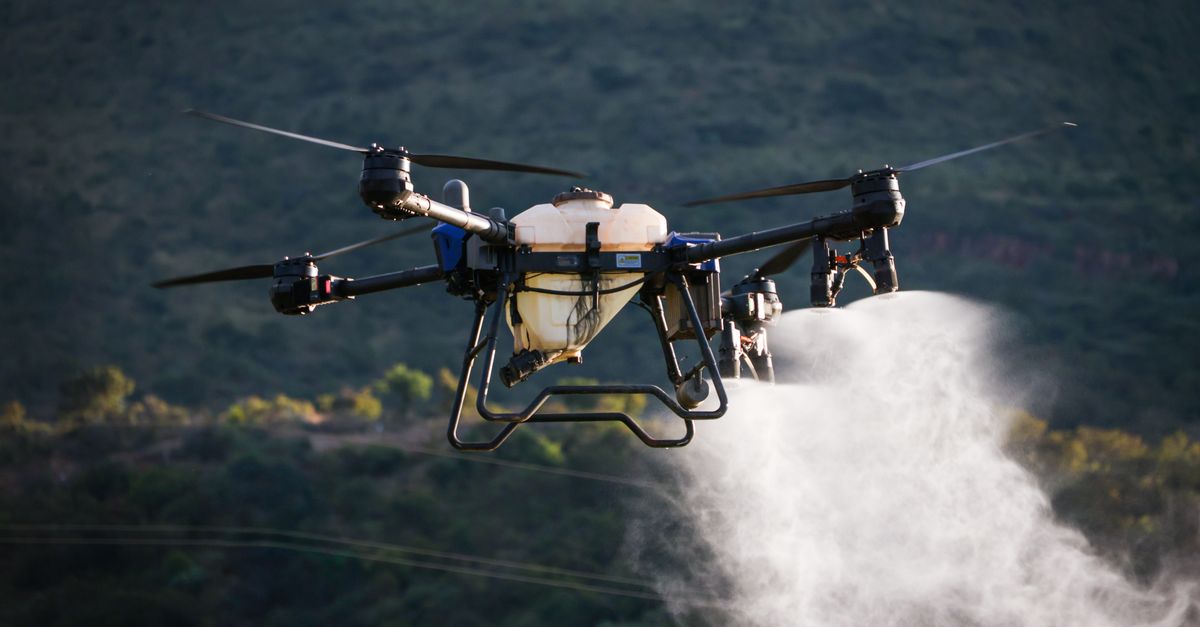
The Digital Transformation of Agriculture Agriculture is experiencing a significant shift fueled by drones and robotic systems. These tools are transforming the way farmers observe their fields, identify signs of stress, and manage inputs like fertilizers and pesticides. By integrating aerial insights, terrestrial robotics, and advanced data analysis, contemporary farms are becoming more accurate, productive, and environmentally conscious. How Drones Enhance Crop Surveillance Efforts Drones, also known as unmanned aerial vehicles, have become essential tools for real-time crop observation. Equipped with advanced sensors and cameras, they provide insights that were previously expensive or impossible to obtain at scale. Multispectral and…
Read More
Guatemala: CSR cases strengthening child nutrition and community education

How workplace engagement in Guatemala’s CSR programs supports child nutrition

Guatemala confronts one of Latin America’s most severe rates of chronic childhood malnutrition, with stunting affecting nearly half of all children under five in many rural and indigenous areas. Ongoing poverty, restricted access to reliable early childhood services, recurring periods of food insecurity, and deficiencies in water, sanitation, and health systems combine to form a complex challenge: inadequate nutrition hinders children’s ability to learn, while under-resourced education structures diminish families’ long-term opportunities. Corporate social responsibility (CSR) initiatives that integrate nutrition programs with community learning and local economic support can simultaneously tackle several drivers of risk and foster impact that is…
Read More
How is solid-state battery progress changing EV timelines and strategies?

how do market maturity and technology readiness affect investments in hydrogen, batteries, and grid infrastructure

Investors evaluating the energy transition face a capital allocation puzzle: hydrogen, batteries, and grid infrastructure each promise growth, resilience, and climate impact, but they differ sharply in risk, timelines, and revenue certainty. The comparison is not about choosing a single winner. It is about matching capital profiles to technologies that sit at different points on the maturity curve and serve different roles in a decarbonized energy system. Technological Preparedness and Market Evolution Batteries are the most mature of the three. Lithium-ion dominates stationary storage and electric vehicles, with well-established supply chains and declining costs. Utility-scale battery projects are bankable, supported…
Read More
What role does circular economy play in product and packaging innovation?

The role of circular economy in sustainable product and packaging development

The circular economy represents a holistic economic development framework intended to separate growth from the depletion of limited resources. Within product and packaging innovation, it replaces the traditional linear pattern of take, make, and discard with a regenerative model that keeps materials circulating for extended periods. This shift reshapes the way products are conceived, produced, delivered, used, and reclaimed, placing innovation at the heart of both sustainability and long‑term competitiveness. Designing for Longevity, Reuse, and Recovery A central function of the circular economy is reshaping product design criteria, as companies move beyond short-term performance or aesthetics to create products and…
Read More
the beast in me

How to Get Cast on a Show Like ‘The Beast in Me’

Netflix’s upcoming limited series “The Beast in Me” features an all-star lineup, including Claire Danes, Matthew Rhys, David Lyons, and Brittany Snow. For creator Gabe Rotter, taking “The Beast in Me” from spec script to the small screen has been a long road. Rotter first wrote the script six to seven years before it was picked up. But it wasn’t until the former “X-Files” writer swapped out the male lead for a female protagonist that he caught the eye of Conan O’Brien’s production company, Conaco, and, subsequently, Jodie Foster. While Foster was considered for the lead, she suggested Danes instead. “The Beast…
Read More